
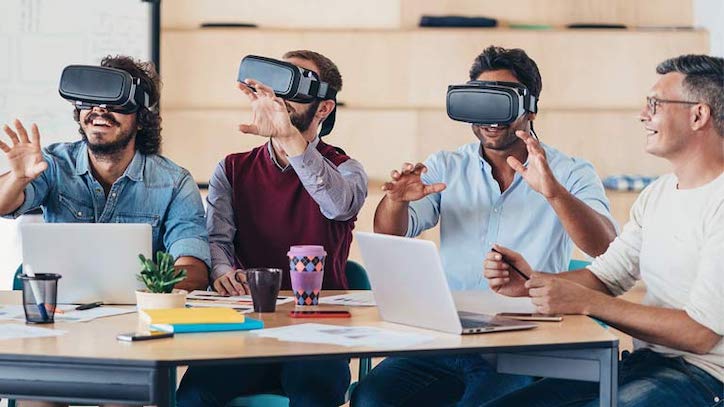
In the evolving corporate landscape, technical expertise alone is no longer sufficient for career success. Communication, leadership, empathy, and problem-solving—commonly referred to as soft skills—are equally critical. However, traditional training methods for soft skills, such as classroom workshops, role-playing exercises, and e-learning modules, often fail to deliver immersive, engaging, and measurable results. Enter vr training for soft skills, a transformative approach that leverages virtual reality to create realistic, interactive, and risk-free learning environments.
Why Soft Skills Training Matters
Soft skills play a pivotal role in employee performance, team collaboration, and organizational culture. Effective communication can prevent misunderstandings, while strong leadership can inspire teams to achieve goals. Similarly, empathy and conflict resolution skills contribute to positive workplace relationships and improved customer interactions.
Despite their importance, soft skills are notoriously difficult to teach and assess. Traditional training methods may provide theoretical knowledge, but they often lack practical application, leaving learners unprepared for real-world situations. This is where vr training for soft skills becomes a game-changer, providing experiential learning that bridges the gap between theory and practice.
The Advantages of VR Training for Soft Skills
Virtual reality creates immersive, simulated environments where learners can practice and develop soft skills in a safe, controlled setting. Unlike conventional methods, VR offers a hands-on approach, resulting in higher engagement, better retention, and measurable outcomes. Key advantages include:
- Immersive Learning Experience: VR places learners in realistic scenarios, allowing them to practice communication, negotiation, conflict resolution, and leadership in lifelike contexts.
- Safe Environment: Mistakes in VR carry no real-world consequences, enabling employees to experiment, learn, and refine their responses without fear of embarrassment or failure.
- Consistent Training Delivery: VR ensures that every employee experiences the same high-quality training, eliminating inconsistencies that may occur with different instructors or locations.
- Immediate Feedback: VR platforms often provide real-time feedback, analytics, and performance metrics, allowing learners to track progress and identify areas for improvement.
- Engaging and Motivating: Gamified elements, interactive role-play, and immersive storytelling make VR training more engaging than traditional workshops, increasing learner motivation and participation.
Use Cases of VR in Soft Skills Training
VR is versatile and can be applied to a wide range of soft skills development programs. Several industries have successfully adopted vr training for soft skills to improve workforce performance.
1. Customer Service and Sales
For customer-facing roles, effective communication, empathy, and problem-solving are crucial. VR simulations allow employees to interact with virtual customers, handle complaints, negotiate deals, and respond to challenging scenarios. By practicing in a virtual environment, employees develop confidence and improve their ability to handle real-world interactions.
2. Leadership and Management
Leadership training often involves learning to motivate teams, resolve conflicts, and make strategic decisions under pressure. VR allows managers to experience challenging situations, such as managing underperforming employees or navigating organizational change, in a controlled and repeatable environment. This experiential learning fosters stronger decision-making skills and better team management.
3. Diversity and Inclusion Training
Creating an inclusive workplace requires understanding biases, improving cultural awareness, and fostering empathy. VR can simulate real-life situations where learners encounter diverse perspectives, helping them recognize unconscious biases and practice inclusive behaviors. By stepping into the shoes of others virtually, employees gain a deeper understanding and appreciation of diversity.
4. Healthcare and Patient Interaction
Healthcare professionals benefit from VR soft skills training by practicing patient communication, empathy, and teamwork. Virtual scenarios allow nurses, doctors, and caregivers to practice delivering difficult news, managing patient anxiety, or coordinating with multidisciplinary teams. This safe simulation helps improve bedside manner and enhances patient satisfaction.
5. Remote Team Collaboration
As remote work becomes more prevalent, VR can simulate virtual office environments where employees collaborate on projects, conduct meetings, and resolve conflicts. This prepares remote teams to communicate effectively, manage projects, and build rapport despite physical distance.
Measurable Results of VR Training for Soft Skills
One of the most compelling reasons organizations are adopting vr training for soft skills is the ability to measure impact. VR platforms track learner behavior, decision-making patterns, and responses to scenarios, generating valuable data for training assessment.
Some measurable outcomes include:
- Improved Retention: Learners retain knowledge and skills longer due to immersive, experiential learning.
- Enhanced Engagement: Employees are more motivated and actively participate in VR scenarios compared to traditional classroom sessions.
- Behavioral Change: Repeated practice in VR encourages positive behavioral changes that translate into real-world performance improvements.
- Reduced Training Costs: VR eliminates the need for physical resources, travel, and multiple training sessions, delivering cost-effective learning at scale.
- Scalability: VR programs can be deployed globally, ensuring consistent training for employees across locations.
Implementing VR Soft Skills Training in Your Organization
Successful implementation of vr training for soft skills requires careful planning and strategic execution. Organizations should consider the following steps:
- Identify Training Goals: Clearly define which soft skills need development and how VR can support these objectives.
- Select the Right VR Platform: Choose a platform that offers realistic simulations, analytics, and adaptability to your industry’s needs.
- Develop Engaging Scenarios: Collaborate with subject matter experts to create immersive, interactive scenarios that reflect real-world challenges.
- Integrate Feedback and Assessment: Ensure the VR program provides actionable feedback, performance metrics, and opportunities for improvement.
- Encourage Practice and Repetition: Allow employees to revisit simulations multiple times to reinforce learning and build confidence.
- Evaluate and Optimize: Continuously analyze data and learner feedback to refine scenarios and maximize training effectiveness.
The Future of VR in Soft Skills Development
The potential of VR in soft skills training is vast and continues to grow. Emerging technologies such as artificial intelligence, haptic feedback, and mixed reality are enhancing the realism, interactivity, and personalization of VR learning experiences.
- AI-Driven Personalization: AI algorithms can adjust scenarios based on individual performance, providing tailored challenges and adaptive learning paths.
- Haptic Feedback: Physical feedback devices simulate touch and motion, making virtual interactions even more realistic.
- Mixed Reality Integration: Combining VR with augmented reality allows learners to interact with virtual elements in the real world, bridging the gap between simulation and reality.
As these innovations evolve, VR will become an essential tool for developing soft skills across industries, ensuring employees are better prepared for modern workplace challenges.
Conclusion
Soft skills are increasingly critical to organizational success, yet traditional training methods often fall short in delivering meaningful, measurable results. VR training for soft skills offers a smarter, safer, and more engaging alternative. By immersing employees in realistic, interactive scenarios, organizations can enhance communication, leadership, empathy, and problem-solving skills in a controlled, risk-free environment.
From customer service and leadership development to diversity training and remote team collaboration, VR provides practical, scalable, and cost-effective solutions for soft skills training. Organizations that embrace VR not only improve employee performance and engagement but also foster a culture of continuous learning and innovation.
Investing in VR soft skills training is no longer just an option—it is a strategic imperative for companies seeking to empower their workforce, enhance productivity, and thrive in today’s competitive business landscape.