
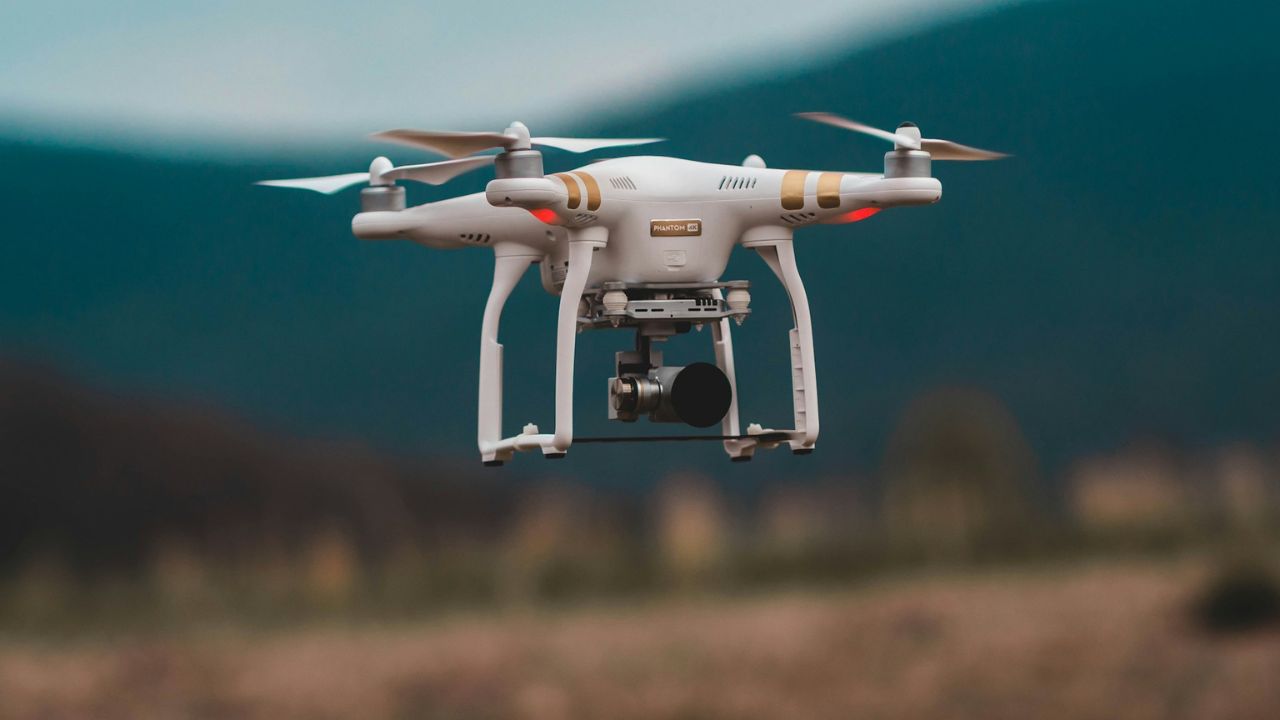
Autonomous drones have changed quite a bit in a short time. They are no longer just small flying cameras used for photography or basic surveying. Depending on the system, a drone can now carry thermal cameras, mapping equipment, communication hardware, LiDAR sensors and other fairly demanding payloads. That creates a pretty obvious engineering problem.
The aircraft has to carry more equipment without becoming too heavy. It also needs to deal with vibration, heat, repeated loading and, in some cases, rough operating conditions. So while flight software gets plenty of attention, the materials underneath all that technology still matter a lot.
Lightweight Doesn’t Mean Fragile
Weight is one of the first things engineers have to think about when designing a drone. A lighter aircraft generally needs less energy to stay in the air, which can help with flight time and payload capacity. But simply removing material is obviously not a solution. The structure still needs enough strength and stiffness to stay stable during flight. This is one reason carbon fibre reinforced polymer is so common in drone construction. It offers high stiffness without adding the weight associated with many conventional metals. It can also handle the vibration that comes with motors and propellers reasonably well.
Aluminium alloys have a different advantage. They are relatively light, easy to machine and widely available. That makes them useful for frames, brackets, housings and other parts where a balance between weight, strength and manufacturing cost is needed.
Then there is titanium. It’s more expensive and generally more difficult to machine, but it makes sense in places where strength, heat resistance or long-term durability are more important than keeping material costs low. Structural joints and propulsion-related components are examples where titanium can become useful.
So there’s no single “best” material for a modern drone. Different parts have different jobs.
The Manufacturing Side Gets Overlooked

A lot of attention goes into designing the aircraft. Less attention tends to go toward how all those parts will actually be made. That’s where CNC machining, automated inspection and newer manufacturing methods come into the picture. A motor mount might look like a simple piece of metal. It isn’t necessarily simple once the tolerances, mounting holes, weight requirements and vibration loads are considered. The same goes for sensor brackets, shafts, housings and structural connectors. Even a small dimensional error can cause problems when several parts have to fit together. This becomes more important when production starts moving toward automation. CNC equipment can produce the same component repeatedly, but the machine cannot compensate for poor material selection or a badly planned manufacturing process. NASA’s recent work on advanced composite manufacturing shows how much attention is going into this area. Its HiCAM programme is looking at ways to make large composite structures more practical to manufacture at scale, rather than treating advanced composites as something limited to small or specialised production runs.
Materials Are Getting Smarter Too
The interesting part is that material development isn’t only about making things stronger or lighter. Researchers are also working on materials that can respond to damage, tolerate higher temperatures or improve impact resistance. Self-healing polymers are one example. The idea is fairly straightforward: if a small crack develops, the material has a mechanism that can help repair or limit that damage. That could be useful for unmanned aircraft that spend long periods operating without someone constantly checking them. Think about a drone inspecting a remote pipeline or monitoring a large agricultural site. It may not be practical to bring it back every time there’s a minor issue.
There’s another problem as well. Modern drones are packed with electronics. Batteries, cameras, GPS equipment, communications hardware, processors and sensors all need space. The structure has to accommodate all of that while still staying light and strong. It’s less about designing a shell around the electronics and more about designing the whole aircraft as one system.
Small Metal Parts Still Do a Lot of Work
This is probably the less exciting part of aerospace technology, but it matters. An autonomous drone can have sophisticated navigation software and advanced sensors, but during development it still needs brackets, mounts, fixtures, prototypes and test components. Those parts have to be made accurately.
Materials such as ground flat stock can be used as a starting material for machining various precision components, particularly where consistent dimensions and a flat surface are useful. It isn’t the kind of technology that gets much attention in discussions about autonomous aircraft, but reliable basic materials are part of the manufacturing chain. And that chain is important.
A high-tech aircraft is still made from individual components. If one small part doesn’t fit properly, the fact that the aircraft has an advanced AI system doesn’t help much.
Autonomy Creates More Engineering Problems
Making a drone fly by itself is one thing. Making it operate safely around other aircraft, buildings, people and changing weather conditions is a much harder problem. The aircraft has to process information from its sensors, make decisions quickly and keep its flight stable at the same time. Regulators are working through many of these issues now. The FAA’s current UAS research includes areas such as detect-and-avoid technology, communications, airworthiness and beyond-visual-line-of-sight operations. That gives a good indication of where autonomous drone technology is heading. The focus is moving beyond simply proving that an aircraft can fly without a pilot.
Reliability is becoming the bigger question. Can it keep operating when conditions change? Can the hardware tolerate repeated use? Can the manufacturing process produce the same component consistently? And can the system respond properly when something doesn’t go according to plan?
Where Aerospace Materials Go from Here?
The next stage of drone development probably will not come from one miracle material. It will come from better combinations. A composite airframe can be paired with machined aluminium parts. New sensors can be integrated into lighter structures. Manufacturing software can improve production consistency, while automated inspection can catch problems earlier. Even AI and autonomy depend on that physical foundation.
That’s easy to forget when the software side of aerospace gets most of the attention. But the aircraft still needs to be light enough to fly, strong enough to survive and accurately manufactured enough to work as intended. The more capable autonomous drones become, the less room there’s for weak links in that chain.
Also Read: How Pop-Up Events Deploy Enterprise Tech on Short Notice