
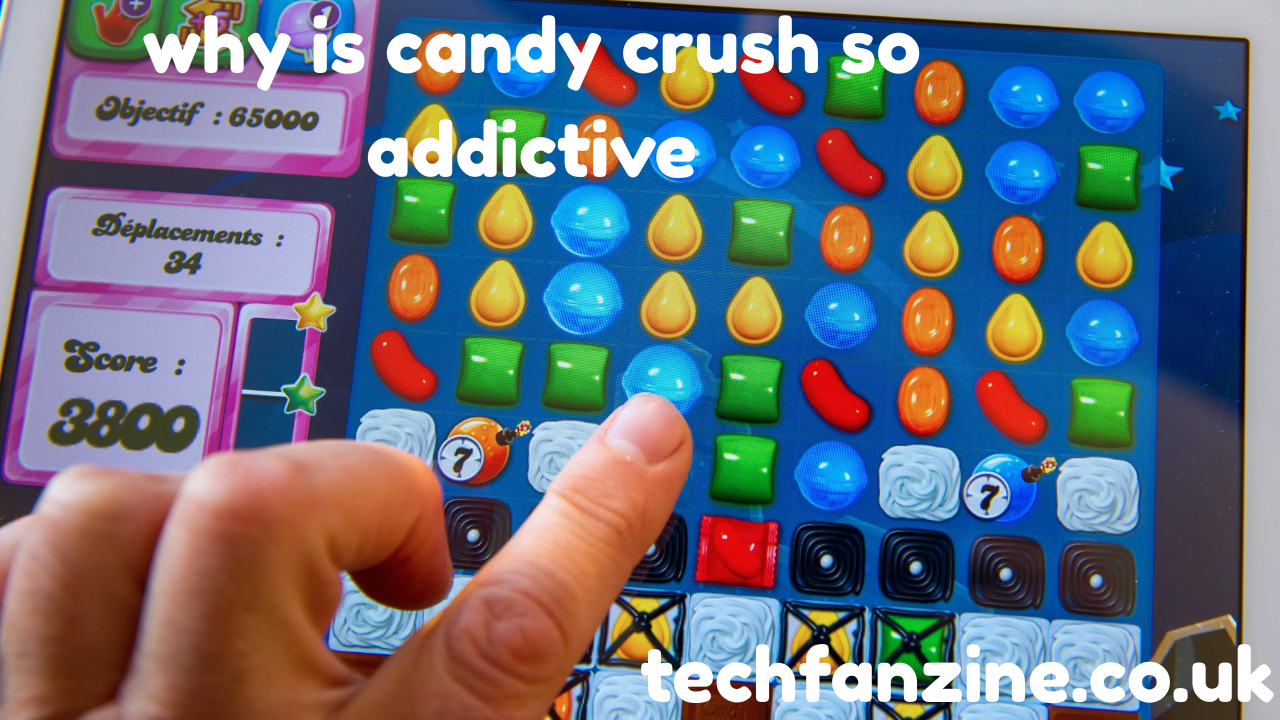
Candy Crush has become one of the most recognized mobile games globally, with millions of downloads and a massive player base that continues to grow even years after its release. But why is Candy Crush so addictive? The simple-looking puzzle game has captured the attention of casual gamers and hardcore players alike. Its addictive nature isn’t random—it’s the result of carefully designed game mechanics, psychological triggers, and reward systems that keep players hooked.
The Psychology Behind Candy Crush

The first answer to why Candy Crush is so addictive lies in psychology. The game taps into the brain’s reward system, particularly the release of dopamine—the neurotransmitter associated with pleasure and motivation. Each time a player successfully completes a level or achieves a high score, the brain rewards them with a small dopamine spike. This creates a sense of accomplishment, encouraging players to continue playing.
Additionally, Candy Crush leverages variable reward schedules. Not every level gives the same reward or challenge, and this unpredictability keeps players engaged. This mechanism is similar to how slot machines work: the uncertainty of the next reward motivates repeated play, making players return to the game again and again.
Simple Yet Challenging Gameplay

Candy Crush’s gameplay is deceptively simple—match three candies of the same color to clear them from the board. The basic concept is easy to grasp, making it accessible to a wide audience, from children to adults. However, as levels progress, the game becomes increasingly complex, introducing obstacles like chocolate blockers, jelly layers, and limited moves.
This combination of simplicity and escalating difficulty is another reason why Candy Crush is so addictive. Players feel confident at the beginning, but the increasing challenge creates a compelling sense of purpose: the desire to overcome obstacles and advance to higher levels. This is known in gaming psychology as the “flow state,” where players are fully absorbed in an activity that balances skill and challenge.
The Power of Short, Bite-Sized Sessions

Candy Crush is designed for mobile devices, making it ideal for short gaming sessions. Levels typically last just a few minutes, which fits perfectly into breaks at work, commuting, or waiting in line. These bite-sized gameplay moments make it easy to play “just one more level,” a habit that can easily turn into extended playing sessions.
Moreover, the game’s structure of lives and retries adds another layer of engagement. Players have a limited number of attempts before they need to wait or purchase extra lives. This scarcity principle increases anticipation and creates a psychological push to either play smarter, return later, or spend money to continue playing immediately.
Social Engagement and Competition
Another reason why Candy Crush is so addictive is its social integration. The game encourages players to connect with friends through Facebook, share progress, and compete on leaderboards. This social element adds a layer of pressure and motivation. Humans are naturally competitive, and the desire to outscore friends or be the first to complete a difficult level keeps players coming back.
In addition, Candy Crush allows players to send and receive lives, which fosters a sense of community and reciprocity. This social reinforcement makes quitting the game harder, as players feel connected to both the game and their friends within it.
Frequent Updates and New Content
Candy Crush maintains player interest through continuous updates. Developers regularly introduce new levels, challenges, and special events. This constant addition of content prevents the game from becoming stale and encourages long-term engagement. Players who have invested time in the game feel a sense of commitment, known as the “endowment effect,” making them more likely to keep playing.
Special events and limited-time challenges are particularly effective because they create urgency. Players fear missing out (FOMO), a powerful motivator that ensures they return to the game to complete tasks before the opportunity disappears.
Visual Appeal and Sound Design
Candy Crush’s bright colors, cheerful animations, and satisfying sound effects are more than just eye candy—they play a psychological role in its addictive nature. Visual rewards, such as exploding candies or cascading matches, trigger positive emotional responses. The auditory cues reinforce success, creating a multisensory feedback loop that strengthens the habit of playing.
This sensory stimulation makes the game more enjoyable and encourages repeated engagement, as players subconsciously seek the pleasant feelings associated with winning or making progress.
The Monetization Factor
The game’s in-app purchases are cleverly designed to exploit the addictive elements. Players can buy extra moves, boosters, and lives, offering a shortcut to overcome difficult levels. While not necessary to progress, these options appeal to those who are deeply invested in completing levels and maintaining momentum. The combination of psychological triggers, challenging gameplay, and monetization creates a feedback loop that makes Candy Crush hard to put down.
The Habit Loop
Candy Crush is a masterclass in creating habit loops. The loop consists of three elements: cue, routine, and reward. The cue might be a notification from the game reminding you to play or the sight of an incomplete level. The routine is opening the app and playing a level, while the reward is the satisfaction of clearing candies, gaining points, or completing a level. This loop is repeated daily, reinforcing the behavior until it becomes a habit.
The simplicity of the cue and the rewarding nature of the routine ensure that players keep returning, often without conscious thought. The game effectively trains the brain to seek the same pleasure over and over again.
Conclusion: The Sweet Science of Addiction
So, why is Candy Crush so addictive? The game combines psychological triggers, strategic gameplay design, social engagement, visual appeal, and monetization in a way that keeps players hooked. Its success is no accident—it is the product of careful design, scientific understanding of human behavior, and the clever use of reward systems.
From dopamine-driven pleasure to social competition and the allure of continuous challenges, Candy Crush has mastered the art of keeping millions of players engaged. While it’s a fun way to pass time, understanding these addictive mechanisms can help players approach the game more mindfully, enjoying it without letting it dominate their daily lives.