
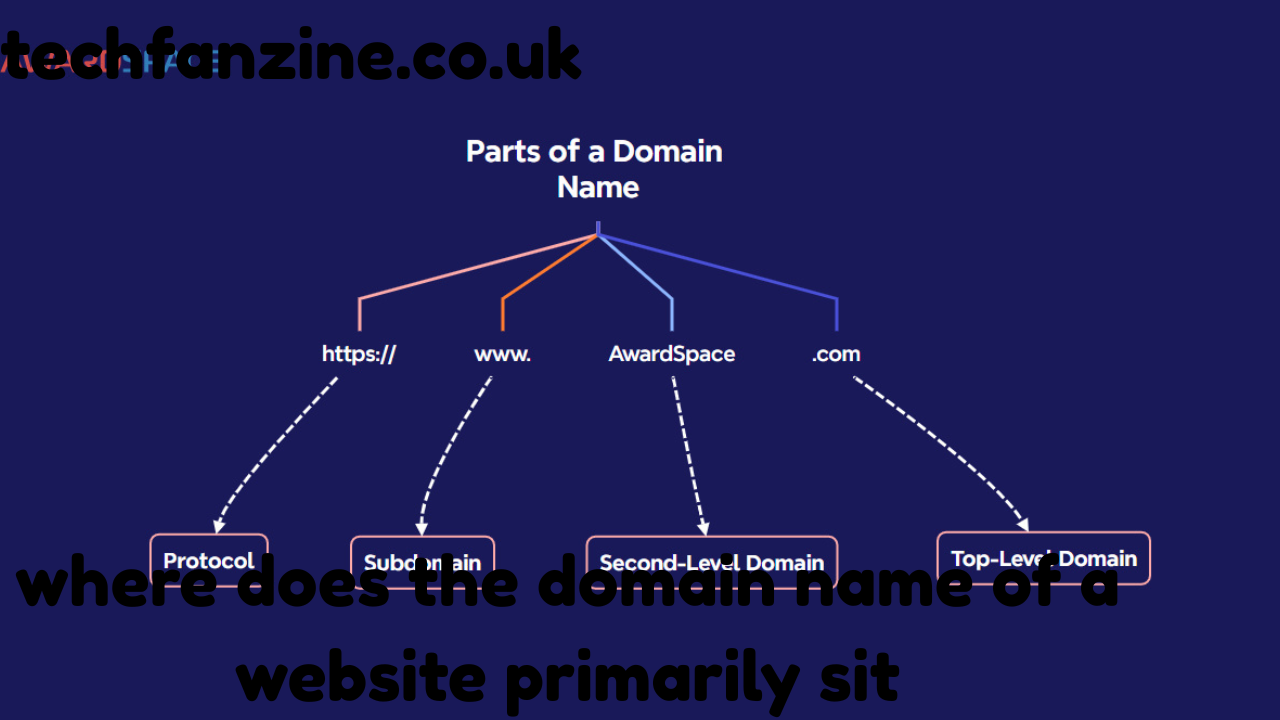
In today’s digital era, understanding the structure of a website is crucial, whether you are a business owner, web developer, or an online enthusiast. One of the most fundamental aspects of a website is its domain name. But have you ever wondered where does the domain name of a website primarily sit? This article dives deep into this topic, explaining the structure, hierarchy, and key components of domain names, while also addressing related questions like which part of the address www.marketing.localdomain.org is the top-level domain name?
What Is a Domain Name?

A domain name is essentially the human-readable address of a website that allows users to access it without remembering complicated numerical IP addresses. Think of it as the street address of your online presence. For example, in the URL www.marketing.localdomain.org, the domain name helps guide browsers to the right server hosting the website.
Understanding where does the domain name of a website primarily sit is essential because it clarifies the hierarchy of internet addressing and shows how domain names connect to servers and web content.
The Role of the Domain Name System (DNS)

The Domain Name System (DNS) is like the phonebook of the internet. It translates human-readable domain names into IP addresses, which computers use to identify each other on the network. When you type a URL into your browser, the DNS determines where the domain name of a website primarily sits by pointing your request to the correct server.
Every domain name has an assigned location in the DNS hierarchy. This hierarchy starts from the root servers at the top, moves to top-level domains (TLDs), and then down to second-level domains and subdomains.
Understanding Domain Name Hierarchy
A domain name is not just a single entity; it consists of multiple parts organized hierarchically. These parts include:
- Top-Level Domain (TLD): This is the last part of the domain name, such as
.com,.org,.net, or country-specific TLDs like.pkor.uk. For the addresswww.marketing.localdomain.org, the TLD is.org. Knowing this helps answer which part of the address www.marketing.localdomain.org is the top-level domain name? - Second-Level Domain (SLD): This is the part directly to the left of the TLD and typically represents the organization or brand name, like
localdomaininwww.marketing.localdomain.org. - Subdomain: This optional part precedes the second-level domain and can denote specific sections or functions of a website, such as
marketingin our example. - WWW Prefix: While technically not part of the domain name itself,
wwwis a conventional subdomain used to indicate the website.
By understanding this hierarchy, one can see where the domain name of a website primarily sits: it is primarily associated with the second-level domain and its corresponding top-level domain within the DNS infrastructure.
Where Does the Domain Name Physically Sit?
While a domain name is primarily a logical identifier in the DNS, it is linked to physical servers that store the website’s content. These servers are often located in data centers around the world. When someone asks where does the domain name of a website primarily sit, the answer involves two perspectives:
- In the DNS: The domain name resides within DNS servers, which map the domain to its respective IP address.
- On the Hosting Server: The website’s files, databases, and applications physically sit on the web hosting server, which the domain name points to.
In other words, the domain name acts as a pointer. It doesn’t “contain” the website but directs traffic to the location where the website physically exists.
How Domain Names Connect to Websites
Once a domain name is registered through a domain registrar, it is linked to DNS records. These records define the exact IP addresses where the website is hosted. The main types of DNS records include:
- A Record: Points the domain to an IPv4 address.
- AAAA Record: Points the domain to an IPv6 address.
- CNAME Record: Points a subdomain to another domain name.
- MX Record: Directs email traffic associated with the domain.
These records are what enable the domain name to “sit” and function correctly on the internet. Without proper DNS configuration, a website may become inaccessible even if the domain is registered.
The Importance of Top-Level Domains (TLDs)
Understanding which part of the address www.marketing.localdomain.org is the top-level domain name is essential. The TLD plays a critical role in DNS routing and helps define the type or purpose of a website. For instance:
.comis used for commercial purposes.orgis typically for organizations or nonprofits.eduis for educational institutions- Country-specific TLDs, like
.pkfor Pakistan or.ukfor the United Kingdom, indicate the geographic location
The TLD is a key component in determining where the domain name of a website primarily sits, as it is one of the highest levels in the domain name hierarchy.
Subdomains and Their Purpose
Subdomains, like marketing in www.marketing.localdomain.org, serve to organize content under the main domain. Businesses often use subdomains to separate blog sections, e-commerce portals, or regional sites. Even though subdomains appear as part of the full domain, the main domain itself — the combination of the second-level domain and TLD — is what primarily “sits” in the DNS.
Domain Registration and Hosting
When a domain is registered, it is officially listed in a registry database maintained by the organization responsible for that TLD. The registrar ensures the domain points to the correct DNS servers. The hosting server then stores the actual website files. Therefore, where does the domain name of a website primarily sit? The answer is: within the DNS and registry systems that link the domain to its hosting server.
Summary
To summarize, the domain name of a website primarily sits within the DNS, which maps it to the physical server hosting the site. Understanding the domain name hierarchy, including the TLD, second-level domain, and subdomains, is crucial for website management and accessibility. Questions like where does the domain name of a website primarily sit? and which part of the address www.marketing.localdomain.org is the top-level domain name? highlight the importance of recognizing the role of each part of a domain name.
A domain name is more than just a web address; it is a critical part of your website’s identity, connecting users to content across the globe. Proper registration, DNS configuration, and hosting ensure that your domain name functions seamlessly and reliably.