
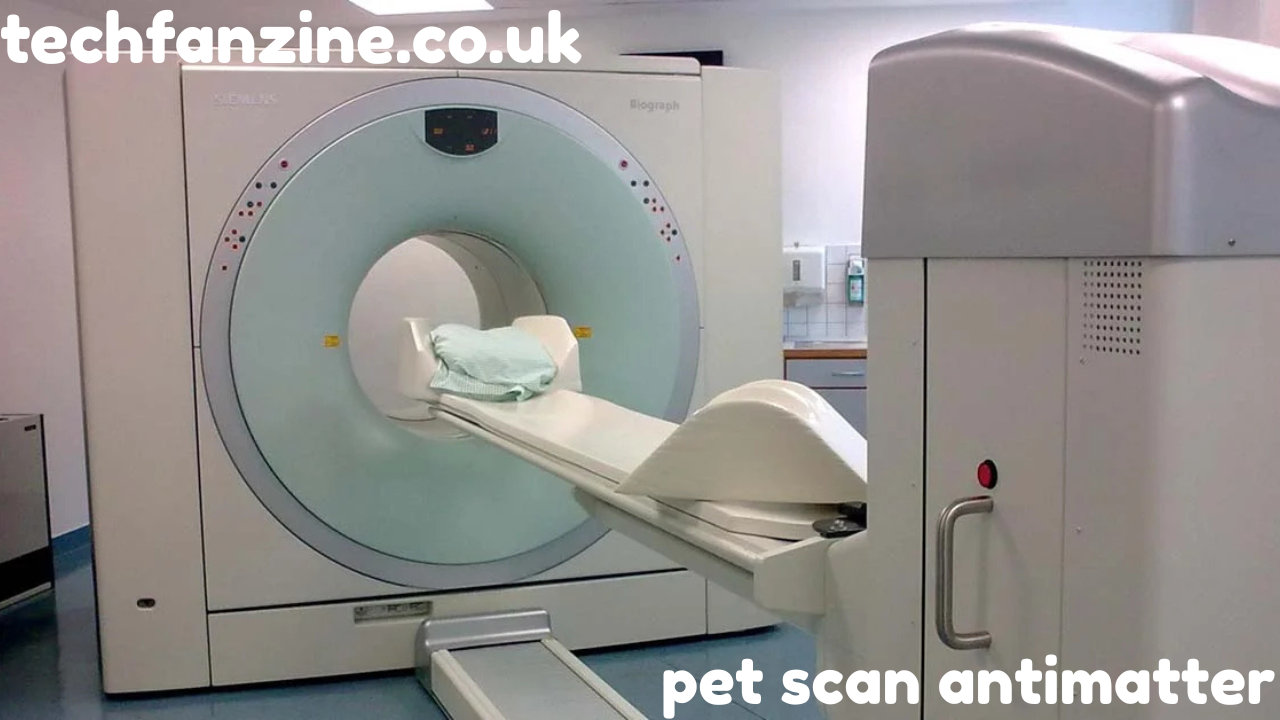
Positron Emission Tomography, commonly known as PET scan, has revolutionized medical imaging, allowing doctors to look inside the human body with unprecedented precision. One of the most fascinating aspects of PET scans is their reliance on antimatter, specifically positrons, which are the antimatter counterparts of electrons. Understanding PET scan antimatter offers a glimpse into the cutting-edge intersection of physics and medicine, showing how fundamental scientific principles can be harnessed to save lives.
What is a PET Scan?

A PET scan is a type of imaging test that allows medical professionals to observe the metabolic processes in the body. Unlike traditional X-rays or CT scans that focus on structure, PET scans highlight function. For example, cancer cells often have a higher metabolic rate than normal cells. By using PET imaging, doctors can detect abnormalities, monitor the effectiveness of treatment, and even study brain activity in neurological conditions.
The technique works by introducing a radioactive tracer into the body, often a form of glucose labeled with a radioactive isotope. This tracer emits positrons, the key component of antimatter PET scan technology. When these positrons encounter electrons in the body, they annihilate each other, producing gamma rays. Detectors surrounding the patient capture these gamma rays to construct detailed 3D images of the body’s internal activity.
The Role of Antimatter in PET Scans

Antimatter, often seen as the exotic counterpart to regular matter, plays a critical role in PET imaging. The positrons used in PET scans are literally antimatter particles. When a positron meets an electron, both particles are destroyed in a process called annihilation, releasing energy in the form of gamma photons.
This annihilation process is what enables the PET scan to create precise images. Without the use of antimatter, PET scans as we know them would not exist. It is fascinating to consider that a phenomenon first predicted by theoretical physics has found such an essential and practical application in medicine. This is why researchers often refer to these imaging techniques as antimatter PET scans, emphasizing the unique role antimatter plays in modern diagnostics.
How Antimatter PET Scans Work
The process of a PET scan antimatter test begins with the introduction of a radiotracer into the patient’s body. Typically, this tracer is a biologically active molecule like glucose, tagged with a positron-emitting isotope such as Fluorine-18. As cells metabolize the tracer, positrons are emitted. These positrons travel a short distance before colliding with electrons in the surrounding tissue, resulting in annihilation and emission of two gamma photons in opposite directions.
Detectors surrounding the patient register these photons simultaneously, allowing sophisticated software to triangulate their origin. By combining thousands of these events, a detailed image is produced, highlighting areas of high metabolic activity. This ability to visualize function, rather than just structure, is what makes antimatter PET scan technology so powerful.
Applications of PET Scan Antimatter in Medicine
- Oncology: Cancer cells metabolize glucose faster than normal cells. PET scans using radiolabeled glucose can detect tumors, monitor their growth, and evaluate treatment responses.
- Neurology: PET scans can study brain function, detect early signs of Alzheimer’s disease, and assess epilepsy.
- Cardiology: By observing blood flow and metabolic activity, PET scans help diagnose heart conditions, such as ischemia or damaged heart tissue.
The advantage of using PET scan antimatter lies in its sensitivity. The gamma photons produced by positron annihilation allow for extremely precise measurements, often detecting abnormalities long before structural changes occur.
The Physics Behind Antimatter PET Scans
From a physics perspective, antimatter PET scan technology is a brilliant application of particle physics. Positrons, discovered in 1932 by Carl Anderson, are the antiparticles of electrons. Their ability to annihilate with electrons and produce gamma rays is what enables the high-resolution imaging of PET scans.
The principle can be summarized as:
Positron (β⁺) + Electron (e⁻) → Gamma photons (γ)
This annihilation releases energy at a precise angle, which is detectable by highly sensitive equipment. Advanced detectors and software algorithms then convert this information into the functional images used by doctors.
Advantages and Limitations of Antimatter PET Scans
Advantages:
- Non-invasive: Provides internal imaging without surgery.
- Functional Imaging: Highlights activity, not just structure.
- Early Detection: Can identify abnormalities before physical symptoms appear.
Limitations:
- Radiation Exposure: Though minimal, it involves exposure to radioactive tracers.
- Cost: PET scans are expensive due to the sophisticated equipment and production of radiotracers.
- Short-lived Tracers: Many positron-emitting isotopes decay quickly, requiring nearby production facilities.
Future of PET Scan Antimatter Technology
The field of antimatter PET scan technology continues to evolve. Researchers are developing new tracers for more specific imaging, improving detector sensitivity, and exploring applications beyond medicine, such as in materials science. Innovations in accelerator technology are also making positron production more efficient, potentially reducing costs and expanding access to PET scans worldwide.
Conclusion
The integration of antimatter into medical imaging through PET scan antimatter is a remarkable example of theoretical physics meeting practical healthcare. By harnessing the annihilation of positrons and electrons, PET scans allow doctors to visualize the body’s inner workings like never before. From early cancer detection to monitoring neurological conditions, the use of antimatter in PET scans is transforming diagnostics and paving the way for even more sophisticated medical technologies.