
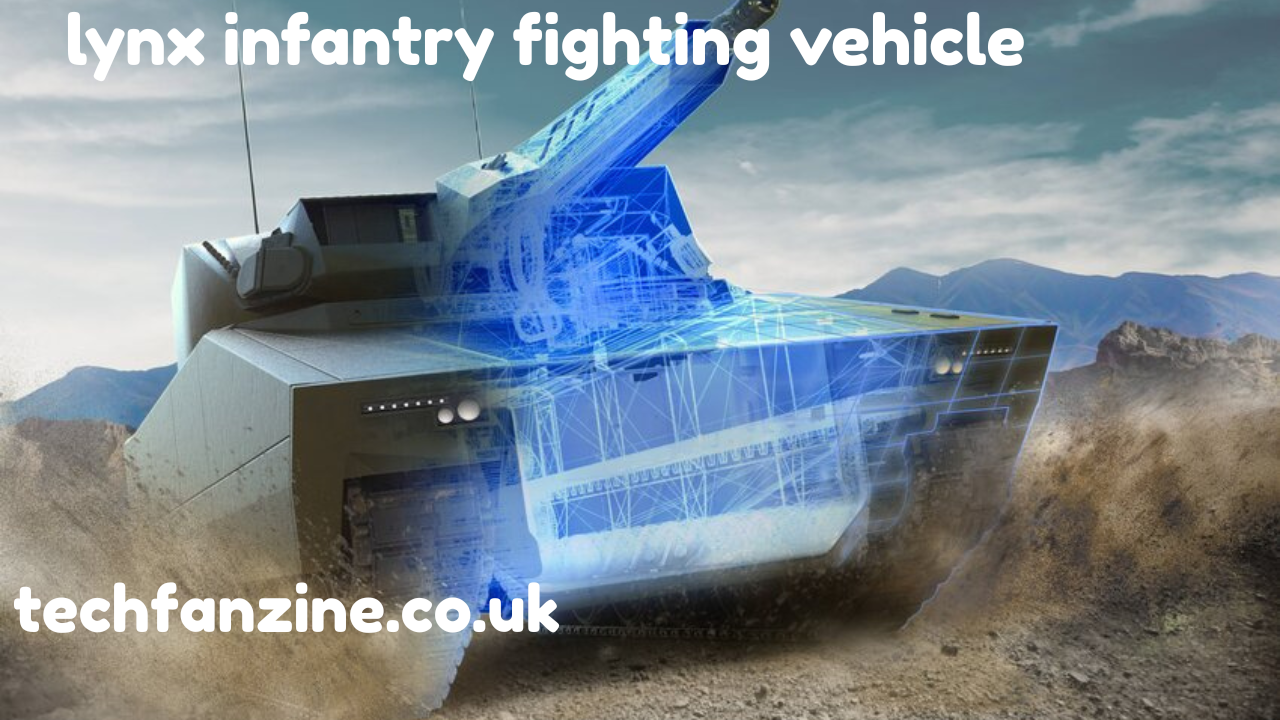
The lynx infantry fighting vehicle represents a new generation of armored warfare platforms designed to meet the evolving demands of modern and future battlefields. As conflicts increasingly involve hybrid warfare, urban combat, asymmetric threats, and rapid technological shifts, militaries require vehicles that combine protection, firepower, adaptability, and digital integration. The lynx infantry fighting vehicle has emerged as a response to these requirements, offering a modular, scalable, and highly survivable solution for mechanized infantry operations.
Developed by Rheinmetall, the lynx infantry fighting vehicle is designed not just as a single platform but as a family of vehicles that can be adapted to various mission profiles. Unlike many legacy IFVs that were modernized incrementally over decades, the lynx infantry fighting vehicle was engineered from the ground up to incorporate lessons learned from recent conflicts, including increased vulnerability to anti-tank guided missiles, drones, improvised explosive devices, and electronic warfare.
Development Background and Strategic Vision

The lynx infantry fighting vehicle was conceived in the mid-2010s, a period when many armed forces were reassessing their armored fleets. Traditional infantry fighting vehicles, while proven, were reaching the limits of upgrade potential. Rheinmetall identified a gap in the market for a platform that could balance heavy protection with operational flexibility, without locking users into a rigid configuration.
Rather than designing a single fixed vehicle, the lynx infantry fighting vehicle was built around a modular architecture. This approach allows armed forces to tailor armor packages, weapon systems, sensors, and electronic subsystems according to threat environments and budget constraints. The design philosophy emphasizes growth potential, ensuring the vehicle can integrate future technologies such as active protection systems, autonomous functions, and advanced battlefield networks.
Design Philosophy and Modular Architecture

At the core of the lynx infantry fighting vehicle is its modular design. The vehicle is divided into distinct functional modules, including the drive module, mission module, and protection systems. This structure allows rapid reconfiguration and simplified upgrades over the vehicle’s lifecycle.
The mission module can be adapted for different roles, including infantry fighting, command and control, reconnaissance, recovery, and even air defense support. This modularity significantly reduces logistical complexity for militaries, as a common chassis can support multiple operational variants. In addition, damage repair and component replacement can be conducted more efficiently, improving battlefield availability.
The lynx infantry fighting vehicle also emphasizes crew ergonomics and survivability. Internal layouts are designed to reduce fatigue during extended missions, while digital displays provide commanders and gunners with enhanced situational awareness.
Armament and Firepower Capabilities
Firepower is a defining characteristic of any infantry fighting vehicle, and the lynx infantry fighting vehicle offers a highly flexible weapons suite. The vehicle is typically equipped with a modern unmanned turret, reducing crew exposure while maximizing combat effectiveness.
Primary armament options include medium-caliber automatic cannons, commonly in the 30mm to 35mm range, capable of engaging both soft and lightly armored targets. These cannons are supported by advanced fire-control systems, enabling accurate engagement while on the move and under adverse conditions.
In addition to the main gun, the lynx infantry fighting vehicle can be fitted with anti-tank guided missiles, providing the ability to engage heavily armored threats at extended ranges. Secondary armament, such as coaxial machine guns and smoke grenade launchers, enhances close-in defense and survivability during maneuver operations.
Protection, Armor, and Survivability
Survivability is one of the most critical aspects of the lynx infantry fighting vehicle. The platform is designed with a layered protection concept that addresses a wide spectrum of threats. Base armor provides protection against small arms fire and shell fragments, while add-on armor modules increase resistance to medium-caliber weapons and shaped-charge munitions.
Mine and improvised explosive device protection has been a key focus in the vehicle’s design. The hull structure incorporates energy-absorbing elements and optimized geometry to reduce blast effects on the crew and infantry squad. Seating arrangements are also engineered to minimize injury during underbody explosions.
The lynx infantry fighting vehicle is compatible with active protection systems, which can detect and intercept incoming projectiles before impact. This capability significantly enhances survivability in high-threat environments, especially against modern anti-tank weapons.
Mobility and Powertrain Performance
Mobility is essential for mechanized infantry to keep pace with armored units and exploit breakthroughs. The lynx infantry fighting vehicle is powered by a high-performance diesel engine paired with an advanced transmission system. This configuration provides a strong power-to-weight ratio, allowing the vehicle to operate effectively across diverse terrain types.
The suspension system is designed to support the vehicle’s weight while maintaining stability and crew comfort. Whether operating in urban environments, desert terrain, or rugged landscapes, the lynx infantry fighting vehicle offers reliable mobility and maneuverability.
Strategic mobility has also been considered in the design. The vehicle can be transported by rail, road, and sea, making it suitable for rapid deployment and expeditionary operations.
Digital Systems and Network Integration
Modern warfare increasingly relies on information dominance, and the lynx infantry fighting vehicle is equipped with advanced digital systems to support this requirement. The vehicle integrates battlefield management systems that allow seamless communication with other units, command centers, and unmanned platforms.
Sensor fusion capabilities combine data from optical sights, thermal imagers, and external feeds, presenting a comprehensive operational picture to the crew. This level of situational awareness enhances decision-making and reduces reaction times in complex combat scenarios.
The lynx infantry fighting vehicle is also designed to support future upgrades in electronic warfare, cyber defense, and autonomous technologies, ensuring long-term relevance.
Variants and Configurations
The lynx infantry fighting vehicle family includes multiple variants tailored to specific roles. The two primary configurations are commonly referred to as the Lynx KF31 and the Lynx KF41. These variants differ mainly in size, payload capacity, and troop-carrying capability.
The KF31 variant is optimized for lighter configurations and smaller infantry squads, making it suitable for forces prioritizing strategic mobility. The KF41 variant, on the other hand, offers increased internal volume, heavier armor options, and greater growth potential, accommodating larger squads and more advanced systems.
Beyond infantry fighting roles, the platform can be adapted into command vehicles, reconnaissance platforms, and support variants, reinforcing its versatility.
Operational Role on the Modern Battlefield
The lynx infantry fighting vehicle is designed to operate as an integral part of combined arms formations. Its primary role is to transport infantry safely to the battlefield, provide direct fire support, and enable dismounted troops to maneuver effectively under protection.
In urban combat, the vehicle’s sensors, precision firepower, and protection systems allow it to support infantry clearing operations while minimizing risk to civilians and friendly forces. In high-intensity conventional warfare, the lynx infantry fighting vehicle can keep pace with main battle tanks, contributing to offensive and defensive operations alike.
Its adaptability also makes it suitable for peacekeeping missions, border security, and rapid response operations, where flexibility and survivability are equally important.
Global Interest and Strategic Significance
The lynx infantry fighting vehicle has attracted international attention due to its modern design and flexible configuration options. Many countries seeking to modernize aging armored fleets view the platform as a long-term investment capable of evolving alongside emerging threats.
By offering local production, technology transfer, and customization options, Rheinmetall has positioned the lynx infantry fighting vehicle as not just a product, but a strategic partnership opportunity for defense forces worldwide.
Future Outlook of the Lynx Infantry Fighting Vehicle
Looking ahead, the lynx infantry fighting vehicle is well positioned to remain relevant in an era of rapid technological change. Its modular architecture allows for the integration of artificial intelligence-assisted systems, enhanced autonomous functions, and improved active protection solutions.
As battlefields become more contested and multidimensional, vehicles like the lynx infantry fighting vehicle will play a crucial role in bridging the gap between heavy armor and agile infantry units. The platform’s balance of protection, firepower, and digital integration ensures it will continue to shape mechanized infantry doctrine for years to come.
Conclusion
The lynx infantry fighting vehicle stands as a benchmark for modern armored vehicle design. By combining modularity, advanced protection, powerful armament, and digital connectivity, it addresses the complex challenges of contemporary and future warfare. For armed forces seeking a versatile and future-proof infantry fighting vehicle, the lynx infantry fighting vehicle represents a compelling and strategically significant solution.