
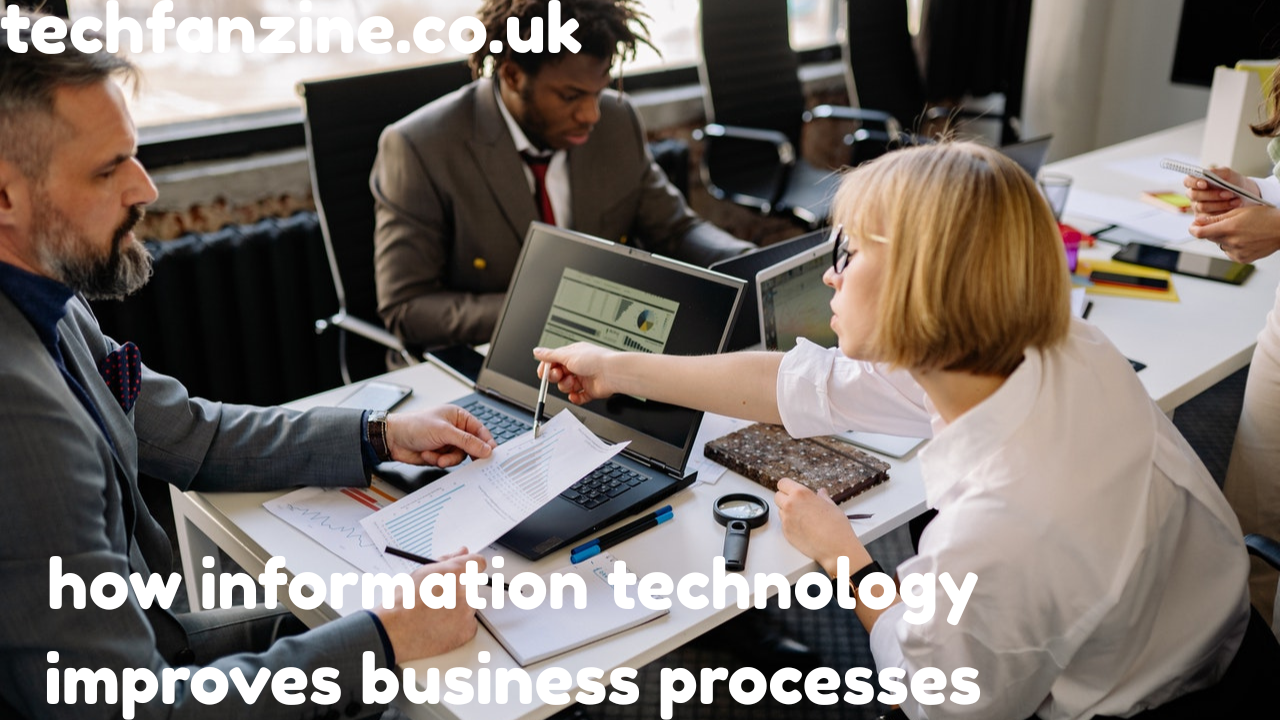
In the modern era, businesses face intense competition, rapidly changing markets, and increasing customer expectations. To stay ahead, companies must optimize their operations and enhance efficiency. One of the most transformative tools available is information technology (IT). Understanding how information technology improves business processes is critical for organizations seeking growth, profitability, and sustainable success. This article explores the many ways IT reshapes business processes, enhances decision-making, and fosters innovation.
Streamlining Operations and Workflow

One of the most significant ways information technology improves business processes is by streamlining operations. Traditional manual processes are often time-consuming, prone to human error, and inefficient. IT solutions, such as enterprise resource planning (ERP) systems, automate tasks ranging from inventory management to payroll processing. By integrating different departments within a single platform, businesses can ensure smoother workflows, eliminate redundancies, and reduce operational costs.
Automation tools and workflow management software allow employees to focus on higher-value activities rather than repetitive tasks. For example, instead of manually processing invoices, companies can implement digital invoicing systems that automatically track, approve, and record payments. This not only speeds up processes but also minimizes mistakes, enhancing overall operational efficiency.
Enhancing Communication and Collaboration

Information technology also improves business processes by enabling better communication and collaboration. In today’s globalized business environment, teams are often spread across different locations. IT tools such as video conferencing, instant messaging, and collaborative platforms like cloud-based document sharing ensure that employees can work together seamlessly.
Enhanced communication reduces delays, prevents misunderstandings, and accelerates decision-making. For instance, project management software allows team members to track progress, assign tasks, and share updates in real-time. This ensures that everyone is on the same page, increasing productivity and improving project outcomes.
Data Management and Decision-Making
Another critical way information technology improves business processes is through effective data management and informed decision-making. Businesses generate vast amounts of data daily, from sales transactions to customer feedback. Without proper IT systems, analyzing this information can be overwhelming and inefficient.
Advanced IT solutions such as data analytics, business intelligence (BI), and customer relationship management (CRM) systems enable businesses to collect, process, and analyze data efficiently. With accurate insights, managers can make informed decisions regarding inventory, marketing strategies, and operational improvements. For example, predictive analytics can forecast customer demand, helping companies manage stock levels more effectively and reduce waste.
Improving Customer Service and Experience
Customer satisfaction is a vital element of business success, and information technology significantly enhances customer service processes. IT enables businesses to offer faster, more personalized, and efficient services. For instance, customer support systems powered by artificial intelligence (AI) can handle routine inquiries through chatbots, allowing human agents to focus on complex issues.
CRM systems help businesses understand customer preferences, purchase history, and feedback, enabling them to tailor services accordingly. This personalized approach not only improves customer satisfaction but also strengthens brand loyalty, ultimately impacting revenue positively.
Cost Reduction and Resource Optimization
Reducing costs while maintaining quality is a constant goal for businesses. Information technology improves business processes by optimizing resources and reducing unnecessary expenditures. Automation, for example, reduces the need for manual labor in repetitive tasks, lowering labor costs and minimizing errors.
IT also enables companies to adopt cloud computing, reducing the need for expensive on-premise servers and infrastructure. Cloud-based systems provide scalable solutions, meaning businesses can pay for only what they use, improving cost efficiency. Additionally, digital tools allow better monitoring of resources, energy usage, and supply chain processes, further enhancing cost management.
Enhancing Security and Compliance
In an era where data breaches and cyber threats are prevalent, information technology improves business processes by strengthening security and ensuring regulatory compliance. IT systems offer robust security measures such as encryption, firewalls, and access controls to protect sensitive business data.
Compliance management software helps businesses adhere to industry regulations, reducing the risk of legal issues and penalties. For instance, financial institutions can use IT solutions to ensure compliance with accounting standards and data privacy laws. By integrating security measures into business processes, companies can operate confidently while protecting both their assets and customers.
Facilitating Innovation and Competitive Advantage
Information technology is a key driver of innovation, and innovation is essential for maintaining a competitive advantage. By adopting IT solutions, businesses can experiment with new processes, develop innovative products, and explore new markets.
Digital tools enable rapid prototyping, virtual simulations, and agile product development, reducing time-to-market and improving adaptability. For example, IT-driven supply chain solutions can help companies respond quickly to market changes, ensuring they stay ahead of competitors. Businesses that leverage IT effectively are better positioned to innovate, differentiate themselves, and capture market share.
Monitoring and Continuous Improvement
Finally, information technology improves business processes by enabling continuous monitoring and process optimization. IT systems provide real-time insights into operational performance, allowing businesses to identify bottlenecks and areas for improvement.
Key performance indicators (KPIs) and dashboards help managers track efficiency, employee productivity, and customer satisfaction. This continuous monitoring facilitates informed adjustments, ensuring processes remain efficient and aligned with business goals. By embracing IT-driven process improvement, companies can achieve long-term operational excellence.
Conclusion
Understanding how information technology improves business processes is essential for modern organizations seeking efficiency, productivity, and growth. IT streamlines operations, enhances communication, improves decision-making, strengthens customer service, reduces costs, ensures security, fosters innovation, and enables continuous improvement. Businesses that strategically implement IT solutions can achieve operational excellence, respond quickly to market demands, and maintain a competitive advantage in a rapidly evolving landscape.
The transformative impact of information technology is undeniable. Companies that fail to integrate IT into their core processes risk inefficiency, missed opportunities, and diminished competitiveness. Conversely, those that leverage IT effectively can enhance business processes, improve overall performance, and position themselves for long-term success in the digital era.