
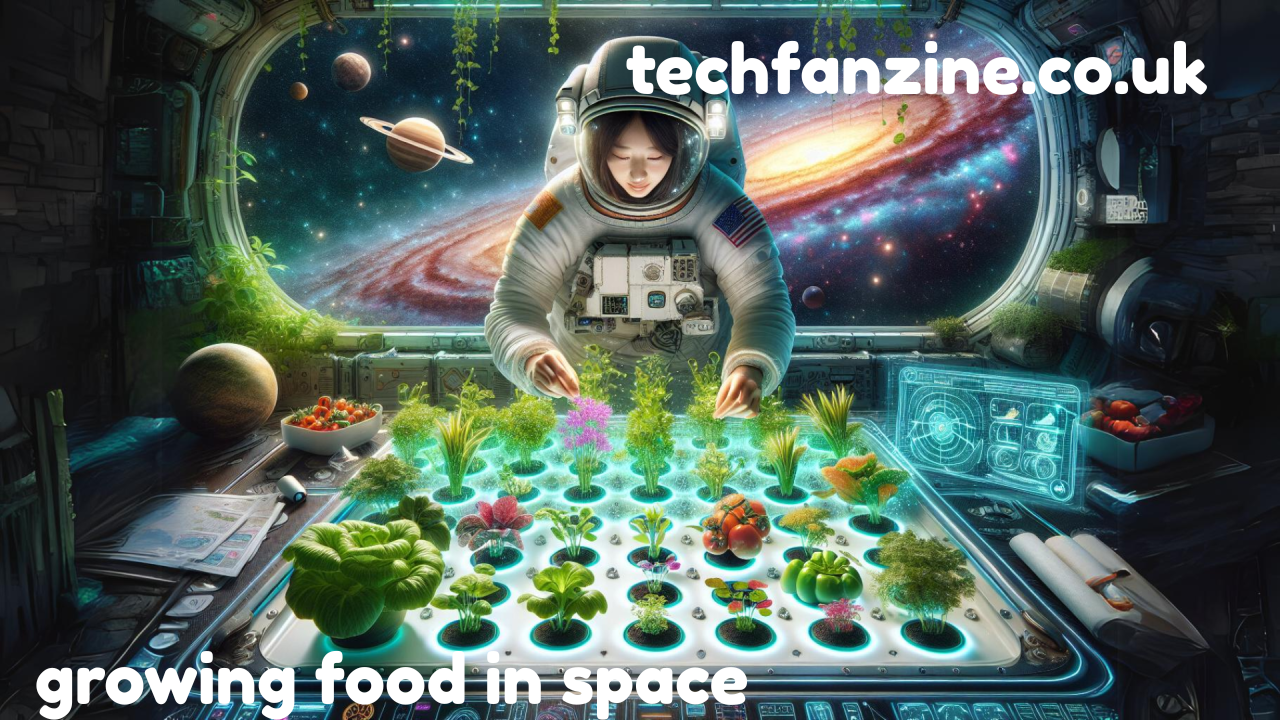
Growing food in space has become a critical area of research as humanity plans longer missions to the Moon, Mars, and beyond. The idea of sustaining life beyond Earth is no longer science fiction. Scientists are exploring innovative ways to ensure astronauts have a steady supply of nutritious food while minimizing reliance on Earth-based resupply missions. In this article, we delve into the challenges, methods, and potential future of growing food in space, while exploring related questions like can you grow plants in space and the science behind growing plants in space.
Why Growing Food in Space Matters

One of the biggest challenges of space exploration is sustaining human life for extended periods. While spacecraft and space stations currently rely heavily on pre-packaged food from Earth, this method is expensive and limited in variety and nutrition. Growing food in space can provide fresh produce, improve crew morale, and reduce the need for frequent resupply missions. Additionally, cultivating plants can help purify air and recycle waste, creating a more self-sustaining environment for astronauts.
Challenges of Growing Plants in Space

Growing plants in space is not as simple as planting seeds and watering them. Microgravity, limited space, radiation, and the absence of natural sunlight create unique obstacles for plant growth. In microgravity, water does not flow through soil the same way it does on Earth, and plant roots may struggle to orient themselves. Moreover, cosmic radiation can damage plant DNA, affecting growth and nutrition. Scientists must find ways to overcome these issues to make space agriculture viable.
Techniques for Growing Food in Space
Hydroponics
One of the most promising techniques for growing plants in space is hydroponics, a soil-less method where plants receive nutrients through a water-based solution. Hydroponic systems are compact and efficient, making them ideal for space environments. By carefully controlling nutrient levels, light, and water, astronauts can grow a wide variety of vegetables, herbs, and fruits.
Aeroponics
Aeroponics is another innovative method that suspends plants in air and delivers nutrients via a mist. This technique uses even less water than hydroponics and allows plant roots to absorb oxygen more efficiently. Aeroponics has been successfully tested on the International Space Station (ISS) and shows great potential for long-duration missions.
LED Lighting
Without natural sunlight, artificial lighting is essential for growing plants in space. LEDs are preferred because they can be tuned to specific wavelengths that optimize photosynthesis. Using red and blue LEDs, scientists can encourage faster growth, higher yields, and stronger plants in microgravity conditions.
Experiments on the International Space Station
The ISS has been a hub for studying growing plants in space. NASA and other space agencies have conducted experiments with lettuce, radishes, wheat, and mustard greens to understand how microgravity affects plant biology. These experiments revealed that plants can adapt to space environments, though their growth patterns and gene expressions may differ from Earth-based plants.
One landmark experiment involved growing red romaine lettuce entirely in space. The crew was able to harvest and eat the fresh leaves, demonstrating that can you grow plants in space is no longer a hypothetical question—it is a proven reality.
Benefits of Space Agriculture
Growing food in space offers multiple benefits beyond nutrition. Plants help recycle carbon dioxide into oxygen, contributing to life support systems. They can also improve mental well-being by providing astronauts with a connection to Earth and a sense of normalcy. Furthermore, mastering growing food in space opens the door to colonizing other planets with sustainable food production systems.
Future Prospects of Growing Food in Space
Looking ahead, space agencies are exploring advanced bioregenerative life support systems, which integrate growing plants in space with air and water recycling. These systems could support large-scale food production on lunar bases or Mars habitats. Scientists are also experimenting with genetically modified plants that can withstand harsh space conditions, grow faster, and offer enhanced nutrition.
Private companies are joining the effort as well. SpaceX, Blue Origin, and other commercial space enterprises are investing in technology to create closed-loop food systems, which could be critical for space tourism and permanent settlements beyond Earth.
Can You Grow Plants in Space Long-Term?
The success of current experiments suggests that can you grow plants in space is not only possible but sustainable with the right technology. However, long-term growth on Mars or the Moon will require solutions to radiation exposure, soil simulation, and consistent water and nutrient delivery. Researchers are confident that within the next few decades, fully functional space farms could become a reality, providing fresh food for astronauts on multi-year missions.
Conclusion
Growing food in space is no longer a distant dream—it is an essential part of humanity’s journey into the cosmos. Through hydroponics, aeroponics, LED lighting, and ongoing experiments on the ISS, scientists are paving the way for sustainable space agriculture. As research advances, we may soon witness fully operational space farms that not only feed astronauts but also support life on other planets. The question can you grow plants in space has evolved from a curiosity to a necessity, and the innovations of today will define how we sustain life beyond Earth tomorrow.