
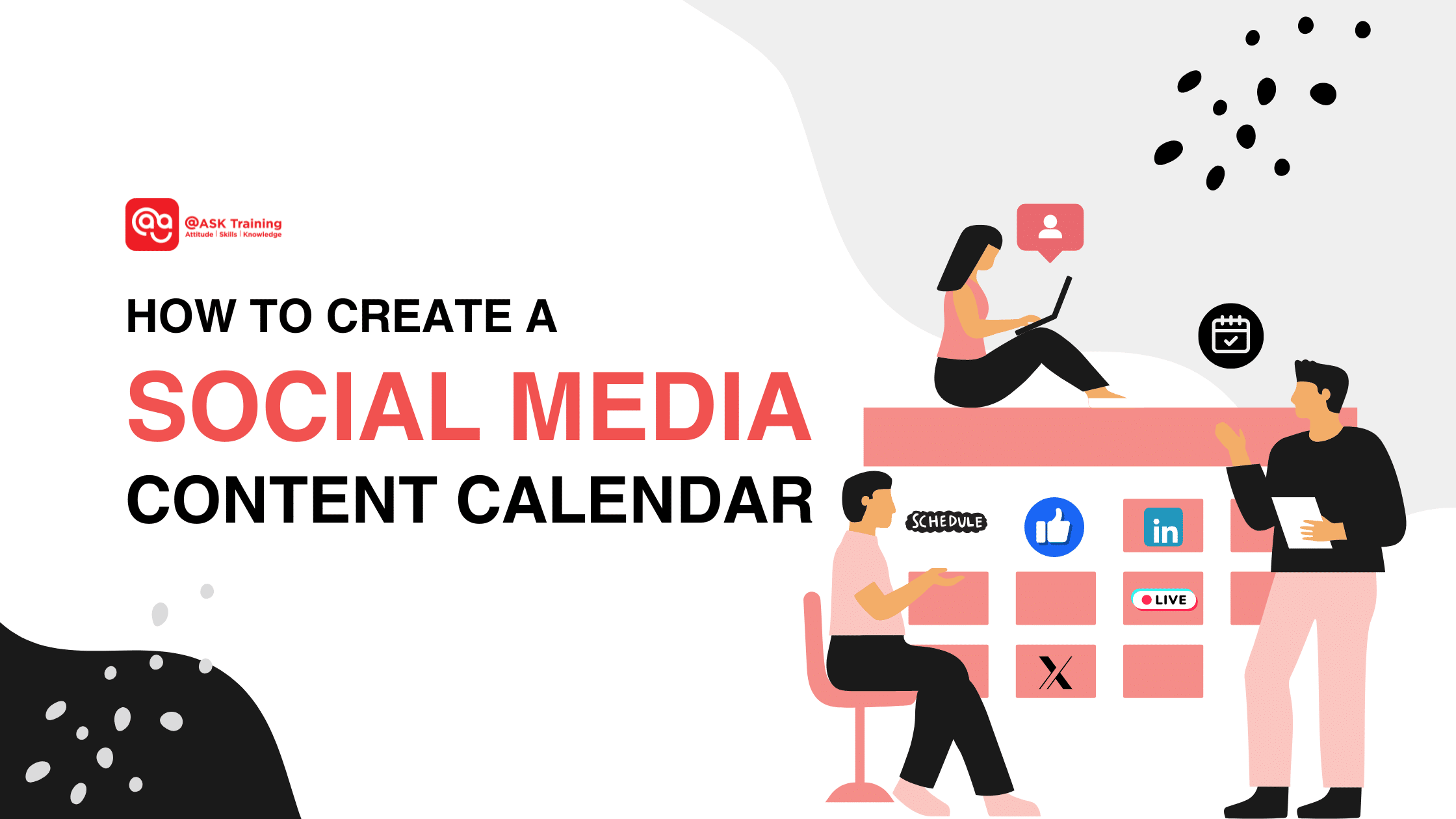
Ask most business owners how they decide what to post on social media, and the honest answer is usually some variation of “when we get around to it” or “when something comes up”. This reactive approach to content is one of the most common reasons social media underperforms, not because the quality of individual posts is poor, but because the overall effort lacks direction and consistency.
A content calendar is the simplest and most practical tool for changing that. It turns social media from an improvised activity into a planned one, allowing businesses to align their content with commercial objectives, seasonal opportunities, and audience behaviour patterns across the year.
What a content calendar actually does
At its most basic, a content calendar maps out what will be published, on which platforms, and when. But a well-constructed calendar does considerably more than that. It ensures that content is balanced across different themes and formats rather than defaulting to the same type of post repeatedly. It creates space to plan content that requires more lead time, such as video or detailed graphics. And it makes it far easier to maintain a consistent publishing cadence, which matters enormously for algorithmic reach and audience habit formation.
The Content Marketing Institute has long identified documented content strategy, of which a calendar is a central element, as one of the clearest dividing lines between the most effective content marketers and those who struggle to demonstrate results. Organisations that plan their content in advance are consistently more likely to report strong performance than those that create content on an ad hoc basis.
Building a calendar that actually gets used
The failure mode for content calendars is not that they are a bad idea. It is that they get built enthusiastically in January and quietly abandoned by March when day-to-day pressures take over. A good calendar needs to be realistic about the resources available, flexible enough to accommodate news and reactive content, and owned clearly by someone in the business who is accountable for keeping it moving.
For many organisations, the most practical solution is to work with a specialist who can take responsibility for both the strategy and the execution. Handing social media management to a team from a company like 99social means the calendar becomes their responsibility to maintain, which removes the problem of internal bandwidth and ensures discipline is kept up even during the busiest periods.
From planning to performance
A content calendar is not just a scheduling tool. Over time, it becomes a record of what you have published, which makes it far easier to analyse what is performing and why. Patterns emerge: certain content themes drive more engagement, certain posting times produce better reach, certain formats consistently outperform others. That data feeds back into future planning and makes each successive quarter more informed than the last.
The businesses that make the most of social media are the ones that treat it as a discipline rather than an occasional activity. A content calendar is the foundation on which that discipline is built. It is not complicated, but it does require commitment, and the returns from that commitment tend to be both meaningful and measurable.