
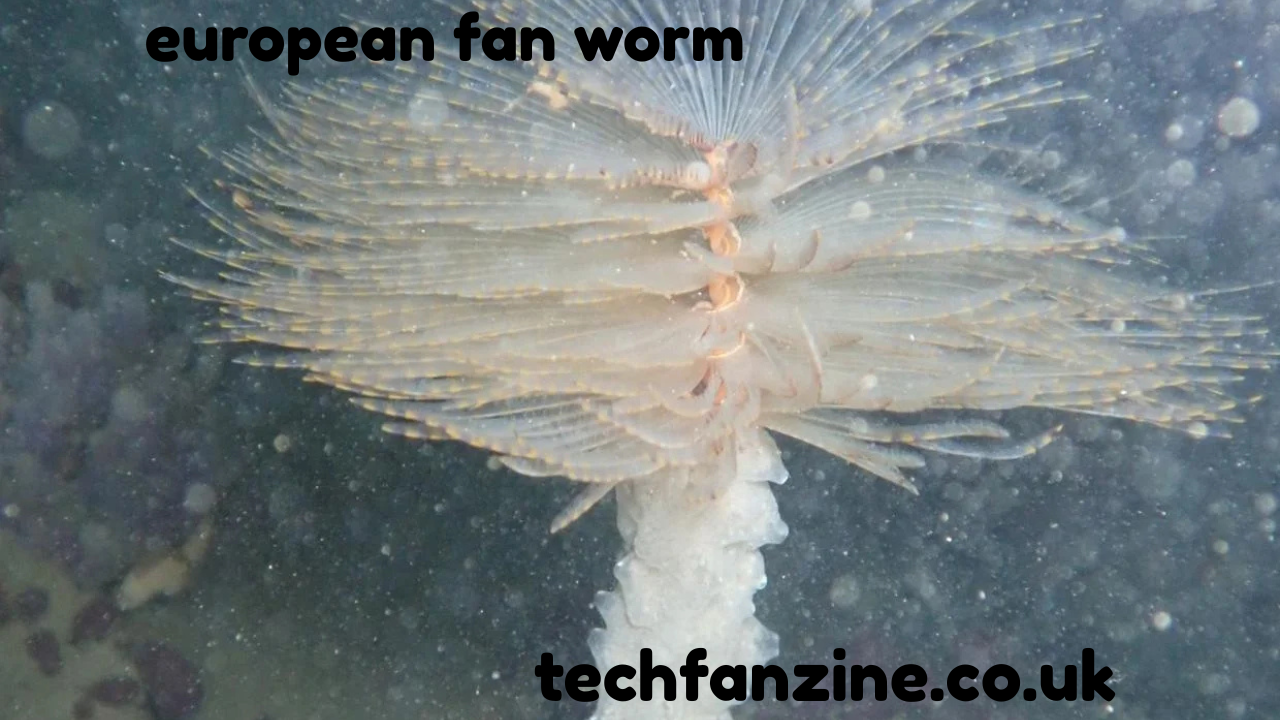
The European fan worm is a marine polychaete worm that has gained attention due to its striking appearance and invasive tendencies in various parts of the world. Known scientifically as Sabella spallanzanii, this species is native to the coasts of Europe but has spread to other regions, causing significant ecological impacts. In this article, we will explore the biology, behavior, habitat, and environmental implications of the European fan worm, as well as management and control strategies.
Appearance and Distinguishing Features

The European fan worm is easily recognizable due to its ornate, feathery crown that extends from its tube. This crown, which resembles a delicate fan, is composed of numerous radioles—fine, hair-like structures used for feeding and respiration. The worm itself lives within a protective tube made of sand, mud, and mucus, which anchors it to surfaces such as rocks, piers, boat hulls, and other submerged structures.
Adult European fan worms can grow up to 30 centimeters in length, although the visible fan may reach 15–20 centimeters in diameter. The coloration of the fan varies from white and cream to shades of orange, red, and brown, making it a visually striking addition to underwater environments.
Native Habitat and Distribution

Originally, the European fan worm is found along the coasts of the Mediterranean Sea and the eastern Atlantic Ocean. Its native habitat includes shallow, sheltered waters where it can attach to hard substrates. These worms prefer areas with moderate water flow, which facilitates filter feeding.
Over the past few decades, the European fan worm has spread to other parts of the world, including Australia, New Zealand, South Africa, and the west coast of the United States. This spread is often linked to human activities, particularly through ship ballast water, hull fouling, and aquaculture equipment.
Feeding and Behavior
The European fan worm is a suspension feeder, meaning it filters small particles, plankton, and detritus from the water using its radioles. The fan captures food particles, which are then transported to the worm’s mouth by ciliary action. Feeding activity is typically continuous during daylight hours, although the worm can retract its fan quickly when disturbed.
Interestingly, the European fan worm plays a role in local ecosystems by filtering water and providing habitat for small marine organisms. However, in areas where it is invasive, this same feeding activity can disrupt native species and alter ecological balances.
Reproduction and Life Cycle
The European fan worm reproduces sexually, releasing eggs and sperm into the water column for external fertilization. Fertilized eggs develop into free-swimming larvae, which eventually settle on suitable substrates to form new tubes. Larvae are highly dispersive, allowing the species to colonize new areas rapidly.
In some regions, the European fan worm can also reproduce asexually by fragmentation, although sexual reproduction is the dominant mode. The ability to produce large numbers of offspring and disperse widely makes the worm a successful invader outside its native range.
Ecological Impact of Invasion
When introduced to non-native regions, the European fan worm can have profound ecological impacts. Dense aggregations of these worms can outcompete native filter-feeding organisms, such as mussels and oysters, for food. Their presence can also change the physical structure of the benthic environment, making it more difficult for native species to settle and thrive.
In addition, the European fan worm’s tubes can accumulate on artificial structures, such as boat hulls, aquaculture equipment, and water intake systems, leading to biofouling problems. This not only increases maintenance costs but can also reduce water flow and negatively affect local industries reliant on marine resources.
Methods of Control and Management
Controlling the spread of the European fan worm is challenging due to its high reproductive potential and resilience. Prevention remains the most effective strategy. Measures include:
- Hull Cleaning: Regular cleaning of boats and ships to prevent the transfer of larvae and adults.
- Ballast Water Management: Treating ballast water before discharge to minimize the introduction of larvae to new areas.
- Physical Removal: In localized infestations, manual removal or scraping of tubes from structures can reduce populations temporarily.
- Public Awareness: Educating the marine community about the risks associated with transporting invasive species.
While chemical treatments are sometimes considered, they are rarely used due to potential harm to non-target species and the surrounding ecosystem. Research continues into biological controls, but no widely accepted solution has been established yet.
Interaction with Human Activities
The European fan worm is both a visual attraction for divers and a concern for marine industries. In some areas, the worm’s colorful fan has made it a popular subject for underwater photography and scientific study. However, its rapid spread and colonization of infrastructure pose challenges for aquaculture, shipping, and coastal management.
Recreational boating is a notable vector for the worm’s expansion. When boats move between infested and non-infested waters without proper cleaning, they inadvertently transport larvae and juvenile worms. Similarly, the movement of aquaculture equipment, such as nets and cages, can facilitate the spread of this species to new regions.
Environmental Significance
Despite being invasive in certain regions, the European fan worm does have ecological significance. In its native range, it contributes to water filtration, nutrient cycling, and the creation of microhabitats for small invertebrates. Its presence can increase local biodiversity under balanced conditions.
However, when outside its natural habitat, the worm disrupts existing ecosystems, highlighting the delicate balance between ecological benefits and harms caused by invasive species. Understanding this dual role is important for marine managers seeking to mitigate negative impacts while appreciating the species’ natural contributions.
Future Research and Monitoring
Ongoing research on the European fan worm focuses on understanding its biology, reproductive strategies, and ecological impact. Monitoring programs in areas at risk of invasion are essential to detect early infestations and implement rapid response measures.
Innovative technologies, such as environmental DNA (eDNA) analysis, are being explored to detect the presence of larvae in water samples, offering a proactive approach to preventing establishment in new habitats. Collaborative efforts among scientists, policymakers, and stakeholders are crucial to manage the spread of this species effectively.
Conclusion
The European fan worm is a fascinating yet challenging marine species. Its beauty and unique feeding structures make it a notable part of marine ecosystems in its native range, while its invasive potential poses significant ecological and economic challenges elsewhere. By understanding its biology, reproductive strategies, and environmental impact, humans can develop effective management strategies to balance conservation with the control of invasive populations.