
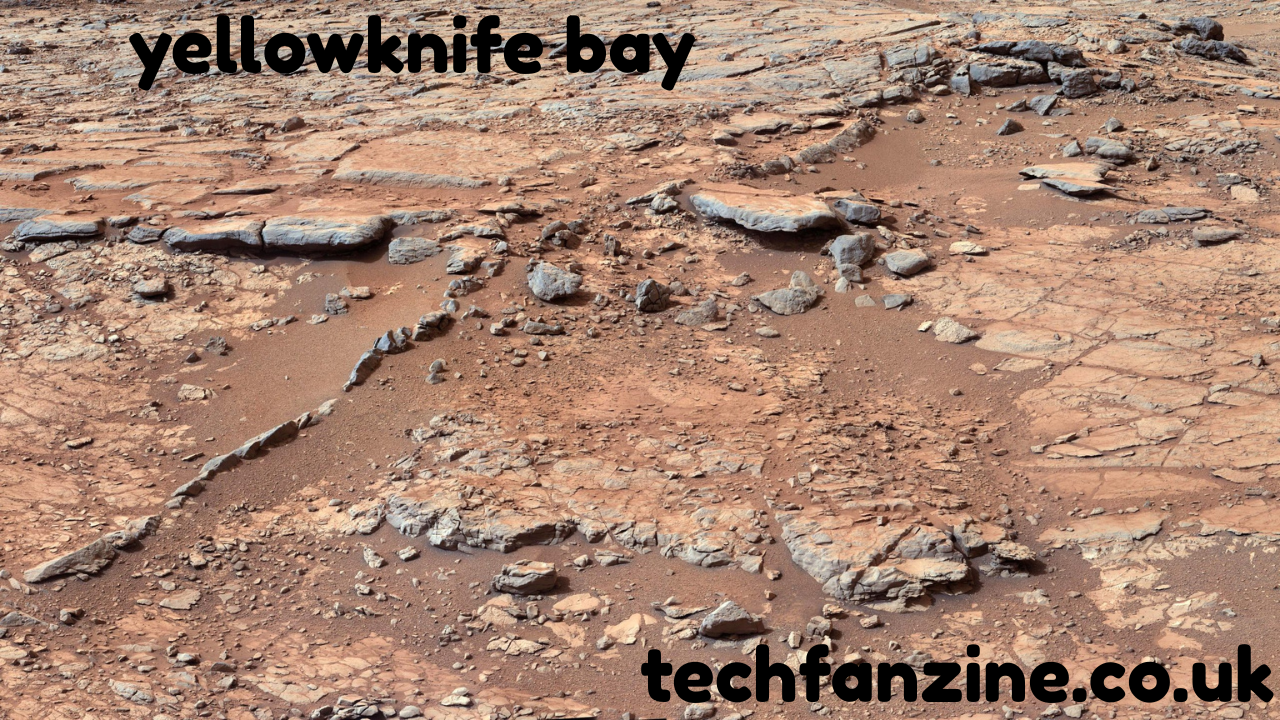
Introduction to Yellowknife Bay
Yellowknife Bay is a remarkable site on Mars, located within the Gale Crater. It gained significant attention from scientists after NASA’s Curiosity rover explored the area in 2012. This location is particularly fascinating because it provides strong evidence that Mars once had conditions suitable for microbial life. The bay represents an ancient lakebed where water played a vital role in shaping the landscape, leaving behind clues about the planet’s past climate and habitability.
Geological Significance of Yellowknife Bay

The geology of Yellowknife Bay is complex and diverse. The bay consists of layered sedimentary rocks that preserve the history of Mars’ environmental conditions over millions of years. Scientists have observed mudstones, sandstones, and conglomerates, indicating that the area was once filled with water. The stratified rock layers suggest periods of deposition, drying, and erosion, providing a timeline of how Mars’ climate evolved. The discovery of fine-grained mudstone at Yellowknife Bay was particularly exciting because it hints at a calm, lake-like environment that existed long ago.
Evidence of Water in Yellowknife Bay

One of the most crucial findings in Yellowknife Bay is evidence of ancient water. Curiosity’s instruments detected minerals such as clay and sulfates, which typically form in water-rich environments. The presence of these minerals indicates that water was not only present but also neutral in pH, making the environment potentially suitable for life. Moreover, the sedimentary structures found in Yellowknife Bay suggest periodic flooding events, creating layers of fine sediments similar to those found in Earth’s lakes. This strengthens the case for Yellowknife Bay as a prime candidate for ancient Martian habitability.
Discoveries of Organic Molecules
Yellowknife Bay has also yielded traces of organic molecules, which are essential building blocks of life. Curiosity’s Sample Analysis at Mars (SAM) instrument identified carbon-containing compounds in rock samples. While these molecules are not direct evidence of past life, they indicate that Mars had the chemical ingredients necessary for life to develop. The detection of organics in Yellowknife Bay sparked excitement in the scientific community, as it suggests that the bay’s ancient environment could have supported microbial life.
Climate Insights from Yellowknife Bay
Studying Yellowknife Bay provides insights into Mars’ ancient climate. The rock formations indicate that the planet once had a more temperate and wet environment than the cold, dry conditions observed today. By analyzing the mineral composition and sedimentary layers, scientists infer that the lake in Yellowknife Bay existed for thousands, if not millions, of years. The sustained presence of water would have created a stable environment, increasing the chances of life developing or surviving for extended periods.
Curiosity Rover’s Exploration of Yellowknife Bay
NASA’s Curiosity rover played a pivotal role in uncovering the secrets of Yellowknife Bay. In 2012, the rover drilled into the bay’s rock layers, collecting samples that were analyzed on-site. These analyses revealed the chemical and mineral composition of the rocks, confirming the presence of an ancient freshwater environment. Curiosity’s exploration not only highlighted the scientific importance of Yellowknife Bay but also demonstrated the rover’s ability to investigate complex geological features in detail.
Implications for Future Mars Exploration
The discoveries at Yellowknife Bay have profound implications for future Mars missions. Understanding the bay’s ancient environment helps scientists identify other sites on Mars that may have been habitable. It also guides the selection of locations for potential sample return missions, where rocks and soil can be brought back to Earth for more detailed analysis. Yellowknife Bay serves as a model for studying other Martian lakes and riverbeds, offering clues about where life might have existed on the Red Planet.
Conclusion: Yellowknife Bay as a Window to Mars’ Past
Yellowknife Bay remains one of the most important Martian sites for understanding the planet’s history. Its sedimentary rocks, evidence of water, and traces of organic molecules make it a key location for studying Mars’ potential to support life. The findings from Curiosity’s exploration continue to inspire scientists and space enthusiasts alike, highlighting the value of robotic missions in unraveling the mysteries of our neighboring planet. As research progresses, Yellowknife Bay will likely remain central to discussions about Mars’ ancient environments and the ongoing search for life beyond Earth.