
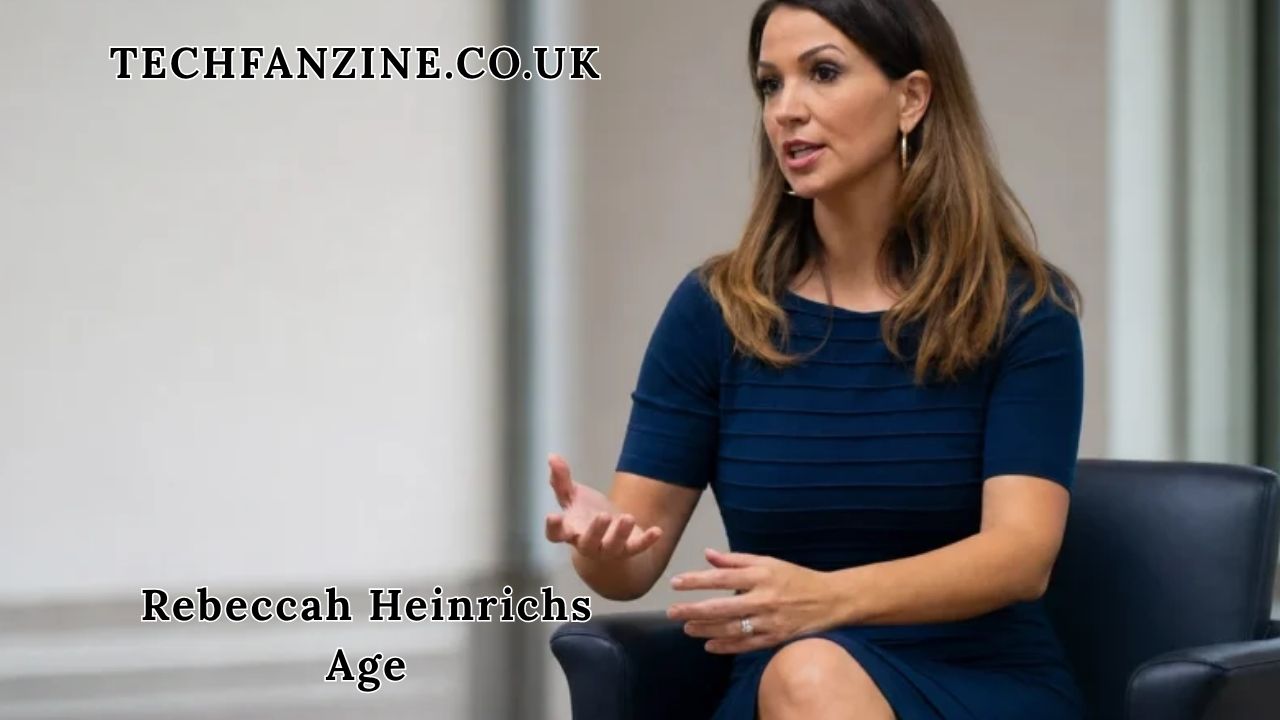
Rebeccah Heinrichs age has become a topic of interest as her public profile continues to grow in American national security and foreign policy discussions. Known for her expertise in nuclear deterrence, missile defense, and U.S. defense strategy, Heinrichs is a senior fellow at the Hudson Institute, a Washington, D.C.-based policy research organization.
Her work focuses on some of the most significant security challenges facing the United States, including competition with China, nuclear threats from Russia, and the development of American missile defense systems. She has also appeared in national media to explain complicated military and foreign policy issues.
Although her professional background is well documented, details about her exact age and date of birth are less readily available. Her career, education, public commentary, and contributions to national security policy provide a clearer picture of her life and professional achievements.
How Old Is Rebeccah Heinrichs?
Rebeccah Heinrichs’ exact age has not been reliably established through publicly verified biographical information. Her date of birth is not consistently provided in authoritative professional biographies, making it difficult to confirm her age as of 2026.
Unlike entertainers and other public personalities whose birthdays frequently appear in official biographies, Heinrichs is primarily known for her work as a defense policy analyst. Her publicly available professional information emphasizes her qualifications, research, and policy experience rather than personal details.
Some online biographies may publish an estimated age or birth year. However, such information should not be treated as confirmed without reliable documentation.
The most accurate answer to the question of Rebeccah Heinrichs’ age is that her exact age remains publicly unverified.
Who Is Rebeccah Heinrichs?
Rebeccah Heinrichs is an American national security analyst, foreign policy commentator, and defense policy specialist. She is particularly associated with research on strategic deterrence, nuclear weapons policy, missile defense, and the security challenges posed by major global powers.
She serves as a senior fellow at the Hudson Institute, where she directs the Keystone Defense Initiative. Her work examines how the United States can maintain effective military capabilities and protect its national security interests.
Heinrichs is also known for translating complex defense issues into explanations accessible to broader audiences. Through interviews, public discussions, and written analysis, she addresses topics that often involve highly technical military systems and complicated international relationships.
Her professional perspective generally emphasizes maintaining a strong American defense posture, modernizing strategic capabilities, and strengthening relationships with U.S. allies.
Rebeccah Heinrichs’ Early Life and Background
Information about Heinrichs’ childhood, birthplace, and early family background is limited in publicly available professional records.
Her public biography centers on her education and subsequent career in national security policy. Consequently, there is insufficient verified information to establish a detailed timeline of her childhood or identify the circumstances that first sparked her interest in international affairs.
What is clear from her professional development is that she pursued an academic and career path focused on politics, security, and international relations.
Her later work reflects a sustained interest in the relationship between military strength, diplomatic decision-making, and the protection of American national interests.
Education and Academic Qualifications
Rebeccah Heinrichs has an academic background that supports her specialization in national security and strategic policy.
She earned a bachelor’s degree from Ashland University in Ohio and a master’s degree in national security and strategic studies from the U.S. Naval War College.
The Naval War College is a professional military education institution that prepares military officers and national security professionals to understand strategy, leadership, and international security challenges.
Her graduate studies are particularly relevant to her work on nuclear deterrence and defense planning. These subjects require an understanding of military strategy, international relationships, and the consequences of government decisions during periods of conflict.
Her educational background helped establish the foundation for her subsequent work in policy research, congressional affairs, and public commentary.
Heinrichs also earned a doctorate in defense and strategic studies from Missouri State University, graduating with distinction. This advanced qualification further strengthened her academic credentials in a field closely connected to her professional research.
Her academic achievements include receiving the Director’s Award for excellence at the Naval War College and participating in the Ashbrook Scholar Program during her undergraduate education.
Rebeccah Heinrichs’ Professional Career
Early Career in the U.S. Congress
Heinrichs gained valuable government experience while working in the U.S. House of Representatives between 2005 and 2009.
She served as an adviser to Republican Congressman Trent Franks of Arizona, focusing on national security, military affairs, and foreign policy. Her responsibilities involved issues connected to the House Armed Services Committee and its Strategic Forces Subcommittee.
She also helped establish the Bipartisan Missile Defense Caucus, which brought lawmakers together to examine missile defense policy.
Before concentrating on defense matters, Heinrichs worked on the oversight staff of the House Judiciary Committee. These congressional positions provided experience with the legislative process and federal policy development.
Career at the Hudson Institute
Heinrichs subsequently established herself as a defense policy researcher at the Hudson Institute.
As director of the Keystone Defense Initiative, she examines strategic threats and the military capabilities needed to address them. Her research focuses on the relationship between defense readiness, deterrence, and American foreign policy.
A central theme of her work is the argument that credible military strength can reduce the likelihood of conflict by discouraging potential adversaries from taking aggressive action.
Her position also involves participating in policy discussions, producing written analysis, and communicating research findings to government officials and the public.
National Security Expertise and Major Contributions
Nuclear Deterrence and Strategic Stability
Nuclear deterrence is one of Heinrichs’ principal areas of expertise.
The concept involves maintaining military capabilities powerful enough to discourage another country from launching a nuclear attack. It depends partly on convincing potential adversaries that aggression would produce unacceptable consequences.
Heinrichs has examined how the United States should adapt its nuclear strategy as Russia and China develop and modernize their strategic forces.
Her analysis generally supports maintaining a credible American nuclear deterrent while evaluating the risks created by changes in the international security environment.
Missile Defense and Military Readiness
Missile defense is another important part of her professional work.
Missile defense systems are designed to detect, track, and potentially intercept incoming missiles. These technologies form part of broader efforts to protect military forces, infrastructure, and populations.
Heinrichs has advocated serious consideration of missile defense capabilities as part of American security planning.
She has also addressed military readiness, which refers to the ability of armed forces to respond effectively to threats or emergencies.
Strategic Posture Commission
One of Heinrichs’ notable public service roles was her appointment to the bipartisan Congressional Commission on the Strategic Posture of the United States.
The commission was established through the Fiscal Year 2022 National Defense Authorization Act to assess American strategic capabilities and future security requirements.
Its work examined the challenges posed by nuclear-armed competitors and considered how American defense planning should respond.
Serving on the commission placed Heinrichs among specialists responsible for evaluating significant questions about the future of U.S. strategic defense.
She has also served on the U.S. Strategic Command Advisory Group and the National Independent Panel on Military Service and Readiness.
Teaching, Writing, and Media Appearances
Alongside her research responsibilities, Heinrichs has contributed to national security education.
She has taught nuclear deterrence theory, including through the Institute of World Politics, and teaches at Missouri State University’s graduate school.
Her teaching connects strategic theory with contemporary security problems, helping students examine competing arguments about nuclear weapons and military policy.
Heinrichs is also a contributing editor of Providence: A Journal of Christianity and American Foreign Policy. Her writing addresses questions involving international affairs, national defense, and strategic decision-making.
Her commentary has appeared in prominent American publications, and she regularly participates in television, radio, and other media discussions.
These appearances have helped make her a recognizable voice in debates about U.S. military strategy, Russia, China, and international security.
Rebeccah Heinrichs’ Husband, Children, and Personal Life
Rebeccah Heinrichs is married and lives in Virginia with her husband and their five children.
These details are included in her publicly available professional biography. However, she has generally maintained a distinction between her public career and her family’s private life.
Her husband’s identity and occupation are not established in the professional biographical information available for verification. Likewise, detailed information about her children’s names, ages, and personal activities is not necessary to understand her professional background.
Although interest in Rebeccah Heinrichs’ age and family has increased alongside her public visibility, her personal life remains considerably less documented than her work in national security.
What Is Rebeccah Heinrichs Doing in 2026?
As of October 2026, Heinrichs continues to serve as a senior fellow and director of the Keystone Defense Initiative at the Hudson Institute.
Her current professional activities include analyzing developments in international security, participating in public policy discussions, and commenting on challenges involving nuclear-armed states.
Her work remains relevant as the United States considers how to manage competition with China, respond to Russian military activities, and maintain credible strategic deterrence.
Her combination of congressional experience, academic research, and public communication continues to shape her role in American defense policy discussions.
Frequently Asked Questions
What is Rebeccah Heinrichs’ age in 2026?
Rebeccah Heinrichs’ exact age in 2026 is not publicly verified. Reliable professional biographies do not provide a confirmed birth date or birth year.
When was Rebeccah Heinrichs born?
Her date of birth has not been established through authoritative publicly available biographical records.
Is Rebeccah Heinrichs married?
Yes. Heinrichs is married and lives in Virginia with her husband and their five children, according to her professional biography.
What is Rebeccah Heinrichs’ educational background?
She holds a bachelor’s degree in history and political science from Ashland University, a master’s degree from the U.S. Naval War College, and a doctorate in defense and strategic studies from Missouri State University.
What is Rebeccah Heinrichs known for?
She is known for her research and commentary on nuclear deterrence, missile defense, American national security strategy, and strategic competition involving Russia and China.
Where does Rebeccah Heinrichs work?
She works at the Hudson Institute as a senior fellow and director of the Keystone Defense Initiative. She is also involved in graduate-level teaching and foreign policy commentary.
Conclusion
Rebeccah Heinrichs has developed a substantial career in American national security through congressional service, academic work, defense policy research, and public commentary. Although Rebeccah Heinrichs’ age and exact date of birth remain unverified, her professional achievements are well documented.
Her educational qualifications, leadership of the Keystone Defense Initiative, and participation in the Congressional Strategic Posture Commission demonstrate her involvement in important defense policy discussions.
With expertise spanning nuclear deterrence, missile defense, and international security, Heinrichs continues to contribute to debates about America’s military capabilities and its approach to global strategic challenges.
Also read: Chris Briney Age: How Old Is the Summer I Turned Pretty Star in 2026?